Our body is
truly a magnificent temple of our spirit, and our organs are highly
valuable principles that enable us to live on this planet.
Now the question arises as to through which channels we can reach our
organs. Apart from a healthy supply of real 'food,' approaches will be
presented here that allow us to perceive our organs holistically and to
convey impulses to them for their magnificent work.
Mindfulness
Mindfulness is a state of consciousness in which we direct our
undivided attention to the here and now, in a basic attitude of
openness to all experiences and living beings. Associated with this is
a relaxed orientation to the present, which does not want to change
anything and does not judge, but is attentive and pays attention to
what appears in our perception. According to Buddhism, mindfulness has
four roots. These include an intentional awareness
1. of the body
2. of feelings and
sensations
3. of thoughts and the
mind
4. of the perceptions
around us
In contrast to concentration, which has a focus, mindfulness involves
an opening of perspective, an 'all-around perception,' which also
includes the possibility of unexpected perceptions as well as the inner
world. This comes with a loving inner serenity, which certainly allows
for quick decisions, but these arise from the moment and take
overarching aspects into account that the mind alone could not grasp.
These are also the moments we experience as a state of happiness.
Thus, mindfulness is the appropriate state in which we can perceive our
body and our organs beyond their anatomical reality.
Meditation
If we take this fundamental wisdom to heart, the body is truly a
magnificent temple of our spirit, and our organs are highly valuable
principles – like gemstones – that enable us to
live a life
on this planet.
This temple is worth loving and respecting. In such loving mindfulness,
we will provide ourselves and our embodied presence only with the best
impulses in the form of physical and mental ingredients.
Now the question arises, through which channels can we reach our
organs? Apart from a healthy supply of food, which hopefully consists
of real “nourishment,” the following will present
approaches that allow us to perceive our organs holistically and convey
impulses to them for their magnificent work.
Body
healing cards
In a healthy body, the organs work together harmoniously like musicians
in an orchestra. We only become aware of this when one organ or another
'falls out of rhythm.' Then we take notice and try to get it
functioning again. But this is too limited, as each organ is integrated
into the overall organism in a complex way. Only a look at the
'in-between' – what happens between the organs –
provides a
complete picture of health and illness.
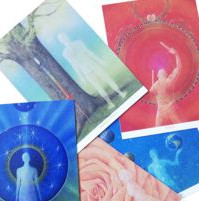
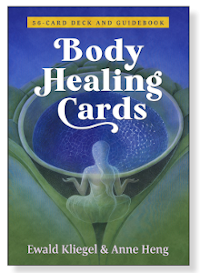
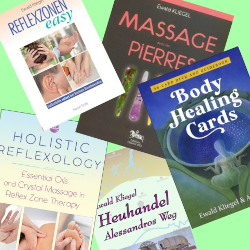
The 55 organ cards make this view of the whole possible in the sense of
a well-founded psychosomatic and spiritual overall perspective. The
idea for the cards was developed by Ewald Kliegel from his many years
of experience in treating patients. The cards by Anne Heng are
masterpieces of intuitive painting art and carriers of information that
address the unconscious levels of the organs. This allows laypeople and
even more so holistic health practitioners to illuminate the various
issues of illness and health and to develop strategies from stressful
situations. But the cards can also be applied earlier: they provide
indications of latent disorders before a disease occurs.
The accompanying book describes eight card-spreading techniques in a
way that is easy to understand. With the drawing of cards, these range
from the simple 'daily profile' to the 'health generator' and an 'organ
positioning' (analogous to family constellations) up to the 'health
matrix' as a multi-layered whole-body image. The card images also open
up buried psychic senses, with which we are not only able to perceive
the pure function of the organs, but at the same time their inner
essence. This leads us into a completely new dimension of body
awareness.
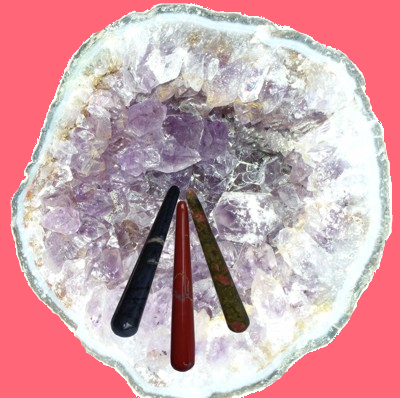
Crystals
This post is not quite finished yet
with heartfelt thanks to
Walter and Andrea von Holst
from the Stone Circle in Stuttgart
for their harmonious description of the gemstones
to support the organs in their essence
See also
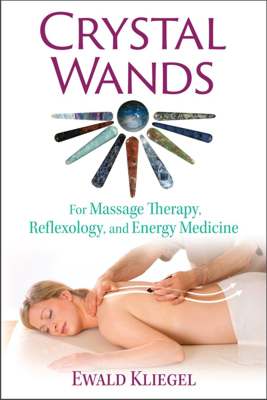
http://crystal-wands.ewald-kliegel.de/
Acupressure
In Traditional Chinese Medicine (TCM), energy channels have played a
major role for thousands of years. These "meridians" run through the
body like irrigation channels, supplying both body and soul with
energy. There are 26 main meridians: 12 on the left side of the body,
12 on the right side of the body, 1 on the front midline, and 1 on the
back midline. Although the bilateral meridians have connections to the
organs and are named according to their association with them, such as
the liver, lung, heart, or kidney meridian, their meanings are much
broader than our anatomical, physiological, or pathological concepts.
In this concept of energy channels, there is, as in an irrigation
system, the effort to keep the flow continuous and even everywhere.
This also maintains physical and mental balance, that is, our overall
well-being. If a meridian is empty, under-supplied, or too full, it has
too much energy, the areas it supplies suffer, and one feels at least
discomfort. Therefore, all treatments aim to fill empty meridians and
balance overfull ones. For this purpose, the 'flows' can be traced with
the fingers or with a gemstone stylus, or the 'sluice gates' - the
acupressure points - can be specifically activated.
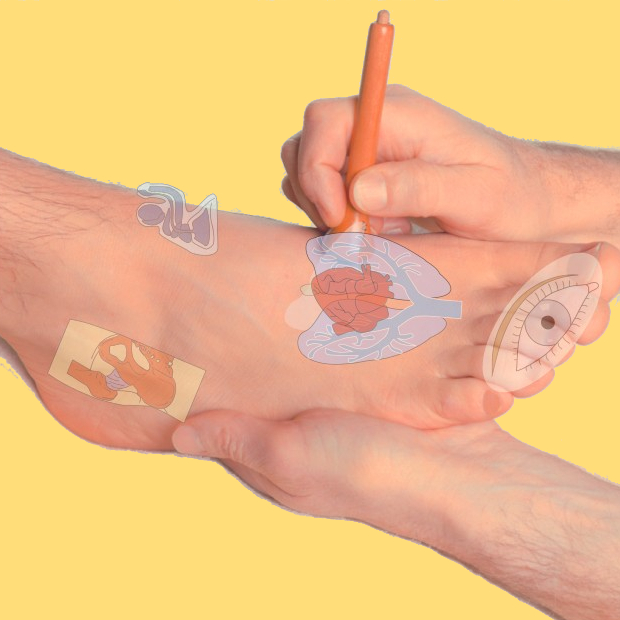
Reflexology
The essential characteristic of reflex zones is that they indicate how
the regulation of energies in our body is structured, in what way our
internal functions have deviated from their optimal
regulation—and that the reflex zone areas normalize again
when our system is well. In this way, we can use our body surface in
three ways, which stand equally alongside each other:
1. Through reflex zone
diagnosis, problems can be recognized early and
treatment strategies developed.
2. Reflex zone therapy
allows us to influence organ disorders through
targeted treatments in the skin zones.
3. In all known high
cultures, in addition to therapeutic applications,
cosmetic treatments have always been known that serve the sense of
well-being. In particular, these attentions were aimed at the face,
hands, and feet.
Wenn eine Reflexzone gestört ist, so kann das
zugehörige Organ in verschiedener Weise
beeinträchtigt sein. Im Wesentlichen sind dann drei Bereiche
betroffen:
If a reflex zone is disturbed, the associated organ can be affected in
various ways. Essentially, three areas are then involved:
1. Metabolic disorders
2. Disorders of the
vegetative and neural supply
3. Disorders in
connection with the 'idea' of an organ (psychosomatic)
All of these areas are governed by one principle: that of the
regulation of organ functions. Long before an organ becomes diseased
and the disorder is clinically detectable, it suffers in its
regulation.
In most organs, a reduction of one-third of function is required before
we even notice a symptom and can detect the organ disorder in the lab.
Up to about half of a functional impairment, we can live largely
"normally" with limitations, and only when two-thirds of an organ
ceases to function does it become life-threatening. We owe our survival
to this compensatory ability. On the other hand, this means we only
notice very late when something is going wrong in the body. This is
where reflex zones come in. As a finely tuned indication system, they
reveal the quality of regulation in the organism and allow us to
optimize body regulation early on – even before we feel
anything. In this sense, reflex zone treatments represent regulation
training for the body.
See also
http://reflexology.ewald-kliegel.de/




 Access to